The core problem
was time.
Cooper Lighting was retiring two legacy platforms, Fifth Light and iLight. WaveLinx DALI was their DALI-2-certified replacement. There was no existing product to iterate on, and the DALI-2 protocol's timing rules are physical. You cannot engineer them away.
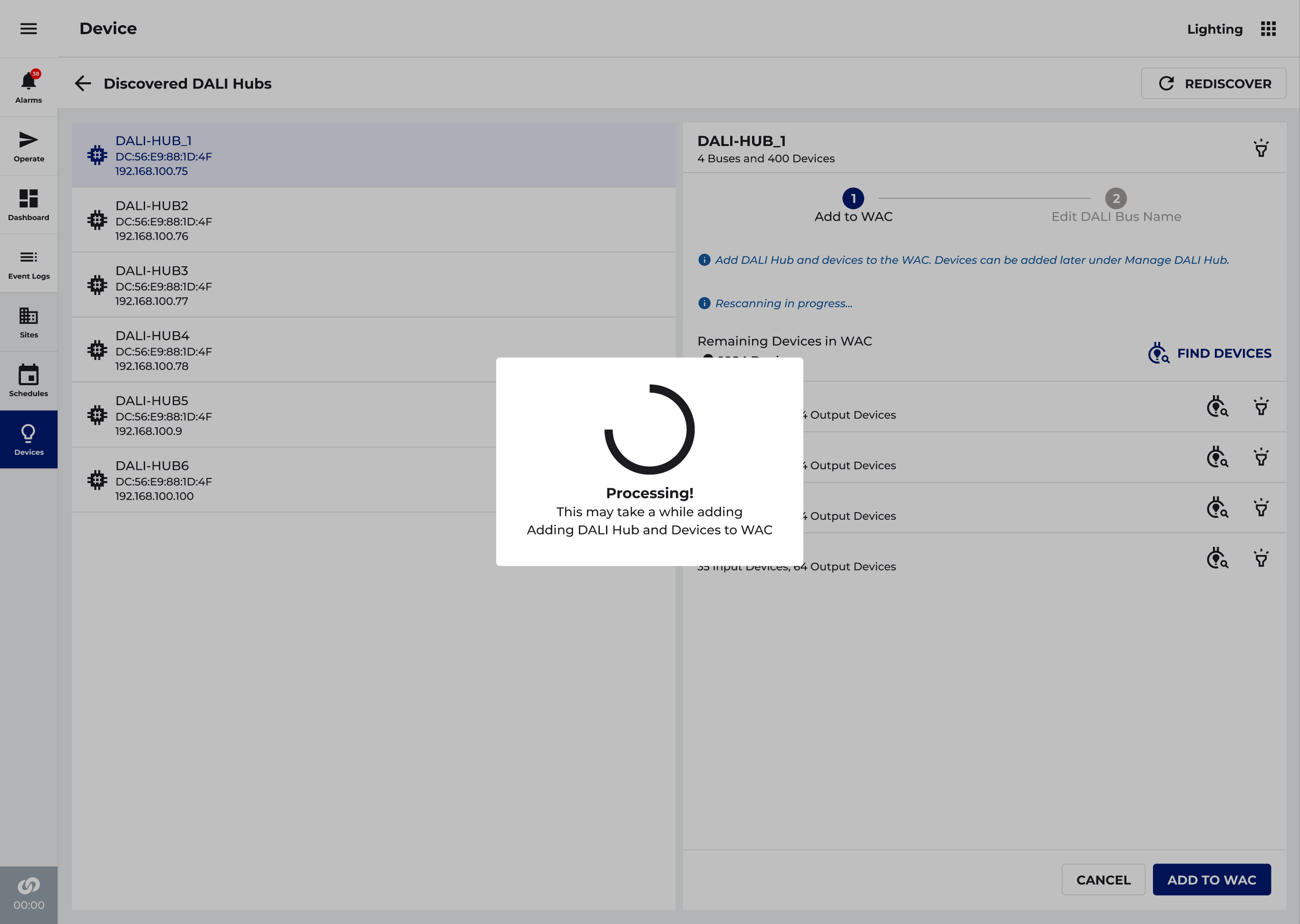
In V1, adding a hub locked the entire UI behind a blocking loader, "Processing… Adding DALI Hub and Devices to WAC" that started at 10 minutes and grew to 27.5 minutes per hub to absorb 250 devices. Multiply across 10 hubs per controller, and contractors sat idle for hours.
Discovery triggered a full scan of all four buses. Until it finished, you could not navigate, create an area, work on anything else, or see how far along it was.
Every screen assumed a handful of wireless devices: the device trees, the area lists, the Operate floor plan. DALI-2 brought thousands.
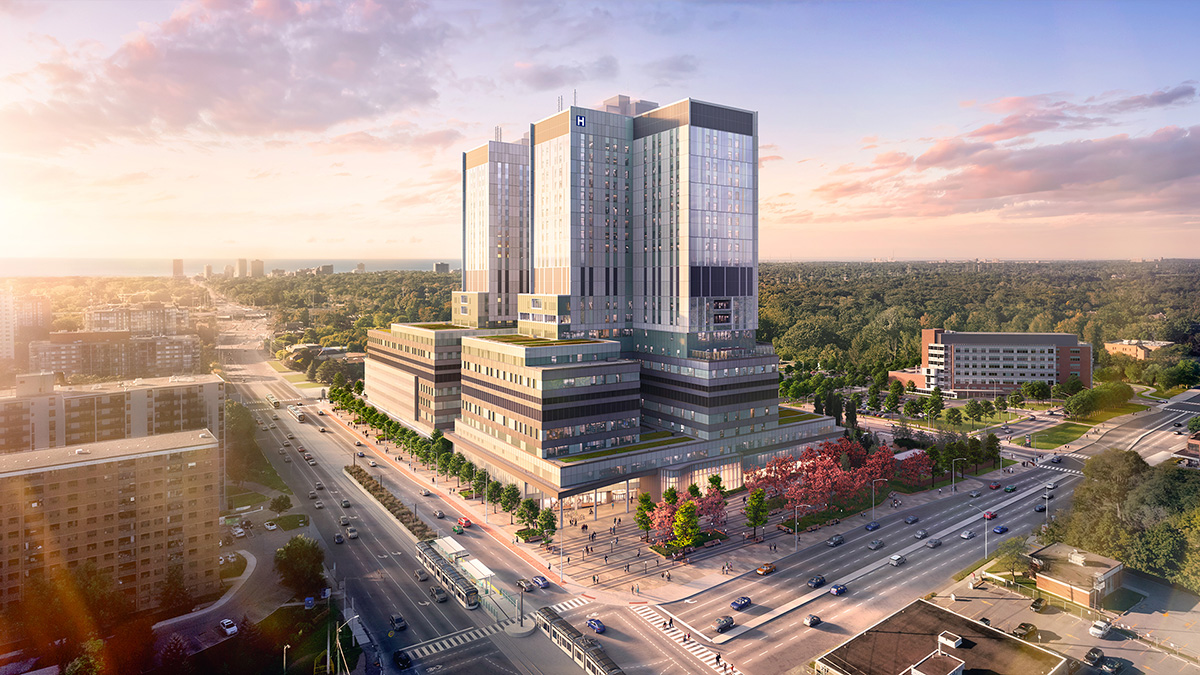
Channel partners and facilities teams were deciding whether WaveLinx DALI could credibly replace the tools they already had. At hospital scale, they were not going to accept an interface that locked up.
UX owner, end to end.
I led UX strategy and design from discovery through handoff, and I was the primary design voice for the whole WaveLinx DALI commissioning system. That meant working directly with Engineering, Architecture, Product, Firmware, and Development, and presenting milestones to rooms of 25 or more stakeholders.
The DALI bus scan is slow by protocol design. Addressing 128 devices per bus and fetching their parameters takes real time.
This was never a solvable engineering problem. The protocol ceiling is physical, so the UX had to absorb the constraint and design around it rather than through it.
Five rooms, one mental model.
Research ran alongside design while hardware and firmware were still being built. The engineering team was my primary source. Channel partners supplied the field context, and I tore down three competing DALI commissioning tools. Structured discovery covered five stakeholder groups before any design started.
Bus bandwidth limits, hub-discovery latency, and the max safe polling frequency during live commissioning.
Loading 3,000+ devices into the existing device tree would time out and degrade the whole app.
Hospital deployment context, commissioning sequence, and wired-only regulatory requirements.
Technicians cross-reference floor plans with MAC lists, work bus-by-bus, and need instant device ID under time pressure.
Adding devices during construction expansions, rebooting hubs without disrupting live floors, fast fault ID.
The existing architecture assumed 30–50 devices per controller. Every piece of UI was built at that scale. Supporting DALI-2 was not a feature addition. It meant rethinking how the whole application handled volume.
"I've been doing DALI for 12 years. I know what order things need to happen. But your app doesn't, so I have to fight it."
From "wait for it"
to "work through it."
{{ pivotBody }}
"We stopped designing for when the scan finishes, and started designing for what users can do while it's still running."
One modal, the whole app behind it.
The actual V1 screen, "Processing… Adding DALI Hub and Devices to WAC." It sat on top of a frozen interface for 10–27.5 minutes per hub. V2 deleted this blocking state entirely.
10 HUBS × 27.5 MIN
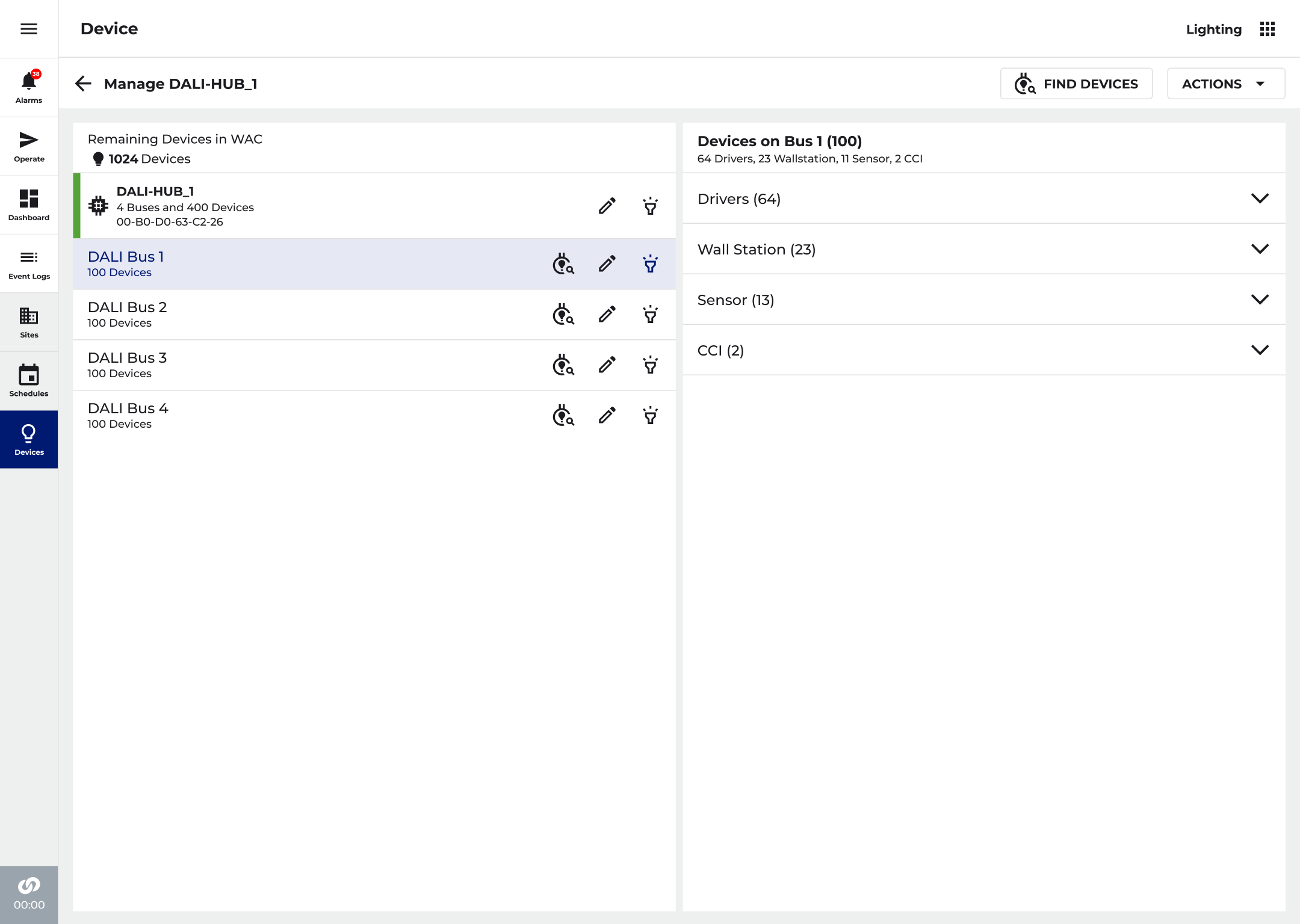
Discovery, not data entry.
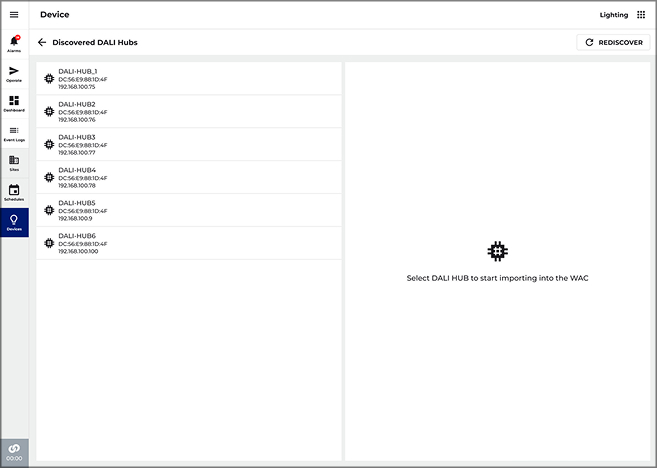
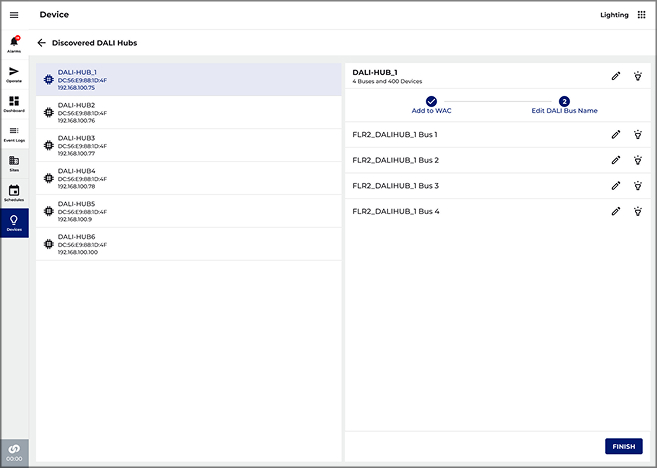
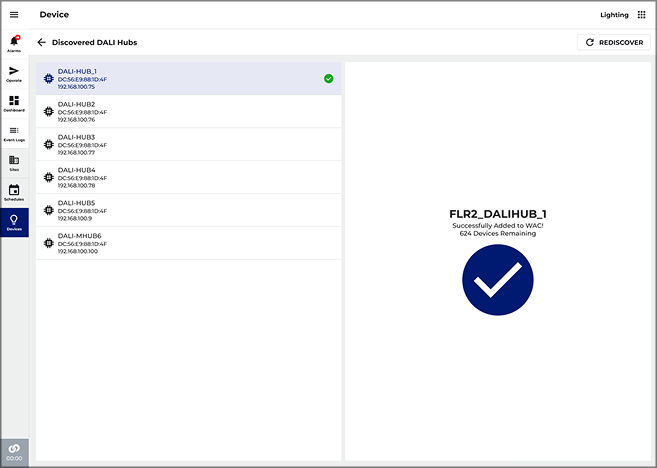
Step through it. Hub-first import takes a raw hub off the network and turns it into a named, addressable system, with a running device counter the whole way.
{{ stepBody }}
The full lifecycle, after launch.
Commissioning is only the start. Hospitals expand, floors get reconfigured, and devices get added to existing buses over time. The Manage Hub screen covers the rest of a DALI-2 install's life: technicians can check hub health, rescan for new devices, and fix what needs fixing without disrupting a live facility.
Inventory, broken down by bus.
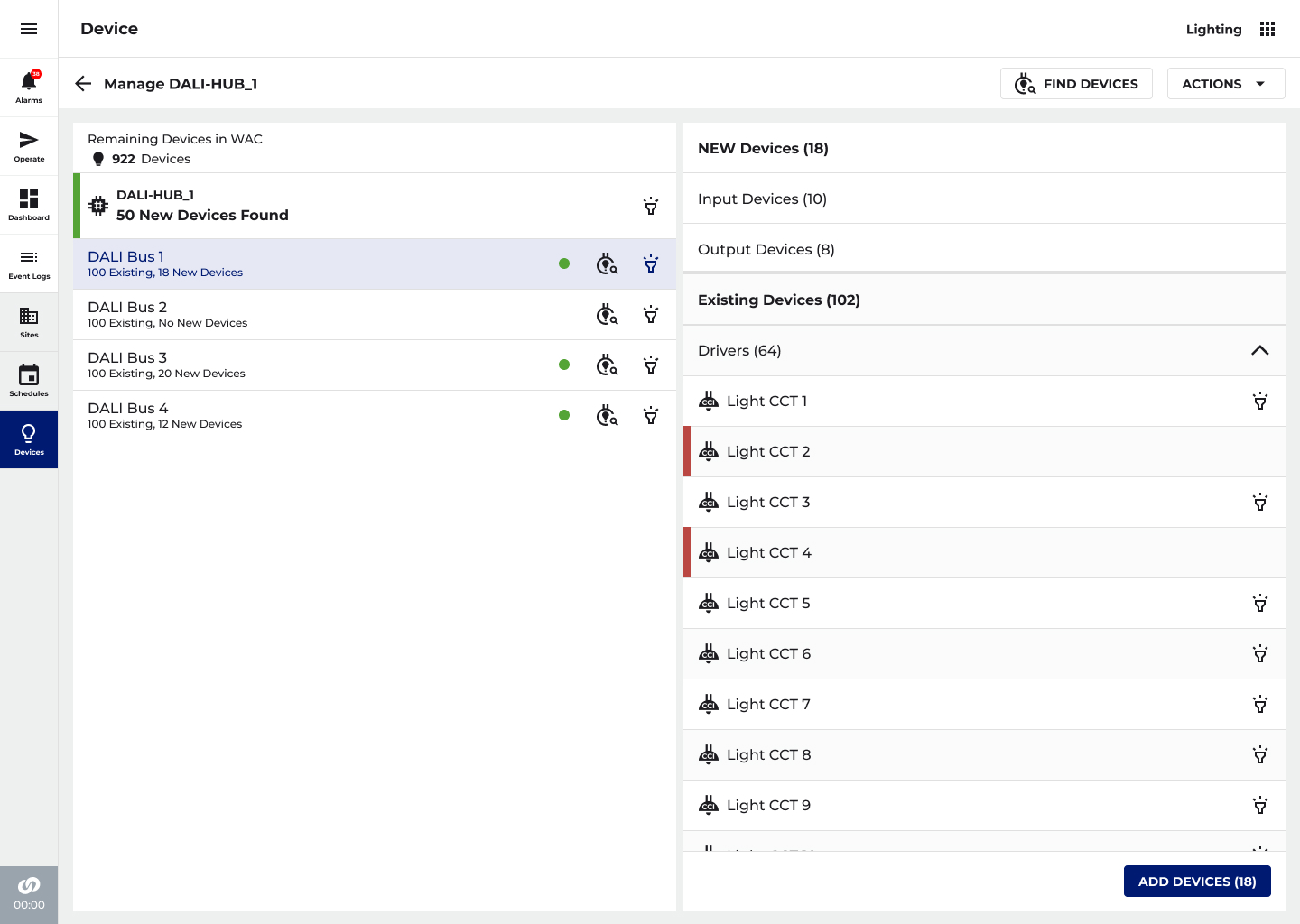
The left panel lists every bus under the hub with live device counts. Select a bus and the inventory breaks down by category: Drivers (64), Wall Stations (23), Sensors (13), CCIs (2). A Remaining Devices in WAC counter stays on screen so the technician never loses the installation-wide picture.
A guarded rescan on a live system.
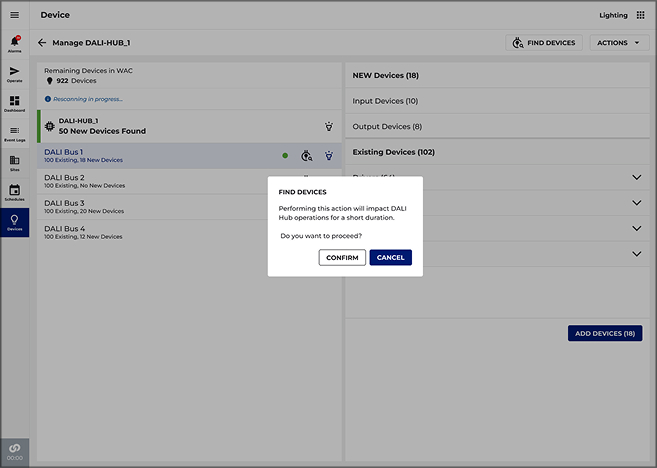
When devices get added to the physical install after commissioning, the technician runs Find Devices from the top bar. The scan briefly affects hub operations, so a confirmation dialog stands between a stray tap and a live system.
Buses that turned up new devices get a green indicator and a new-versus-existing count, so technicians can tell which buses need attention without checking each one by hand.
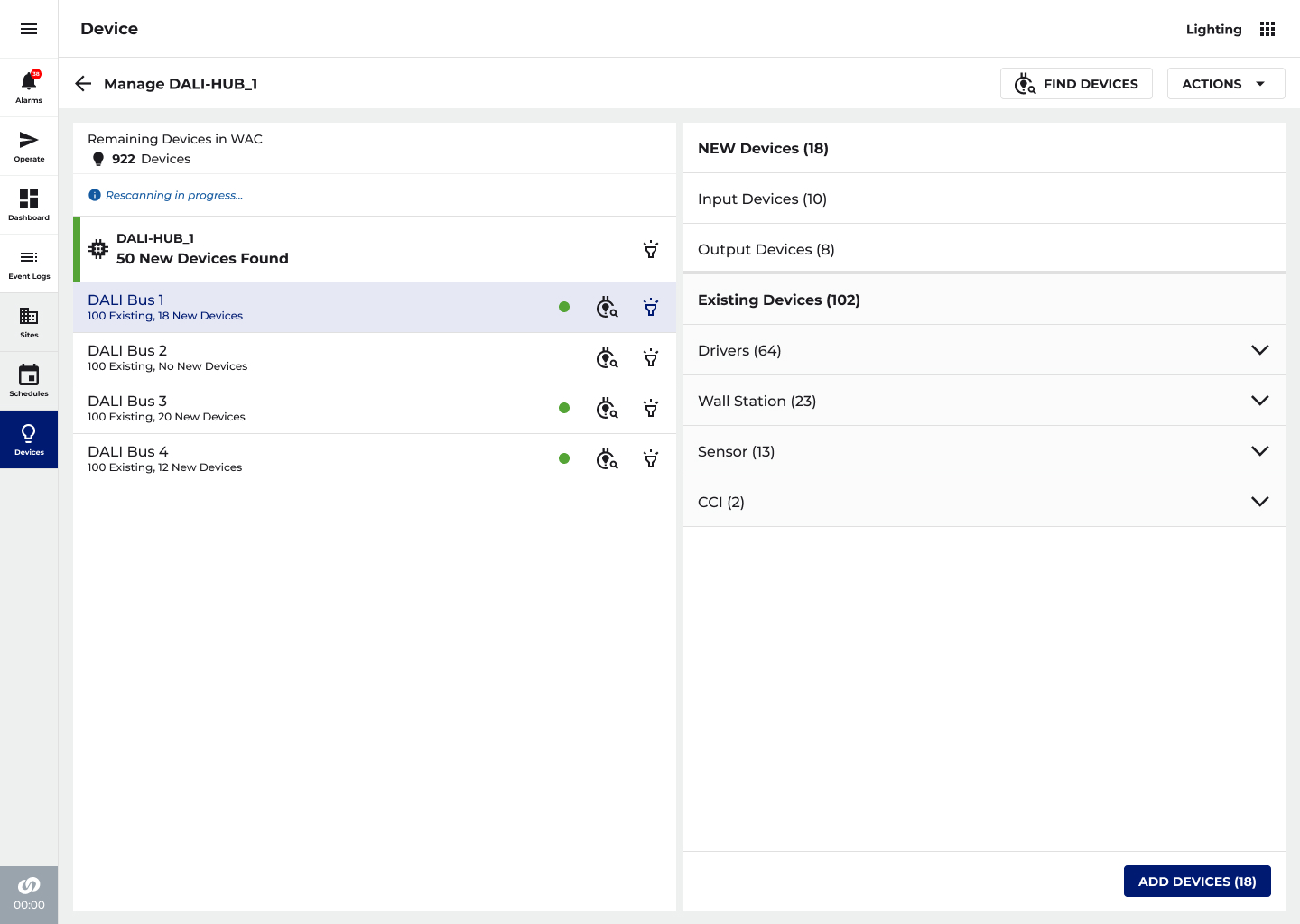
New and existing, kept separate.
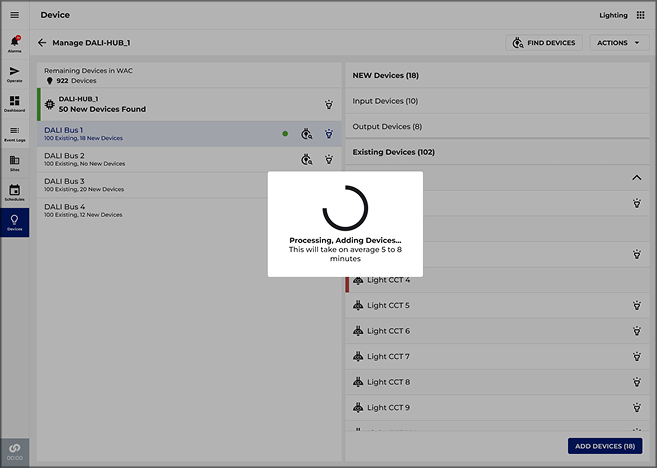
The detail panel keeps New Devices apart from Existing Devices and sorts each by type. One ADD DEVICES (n) action imports the lot. A processing modal gives a 5–8 minute estimate up front, and a toast confirms the result: "18 NEW Devices added to Bus 1."
Splitting new devices from existing ones before anything gets committed was a deliberate safeguard at hospital scale. Import an unexpected count blindly and you cause real commissioning problems further down the line. The green bus indicators let a technician triage at a glance and decide which buses to take first. The time estimate in the processing modal came straight from commissioning teams, who needed to plan around a 5–8 minute rescan on a live hub.
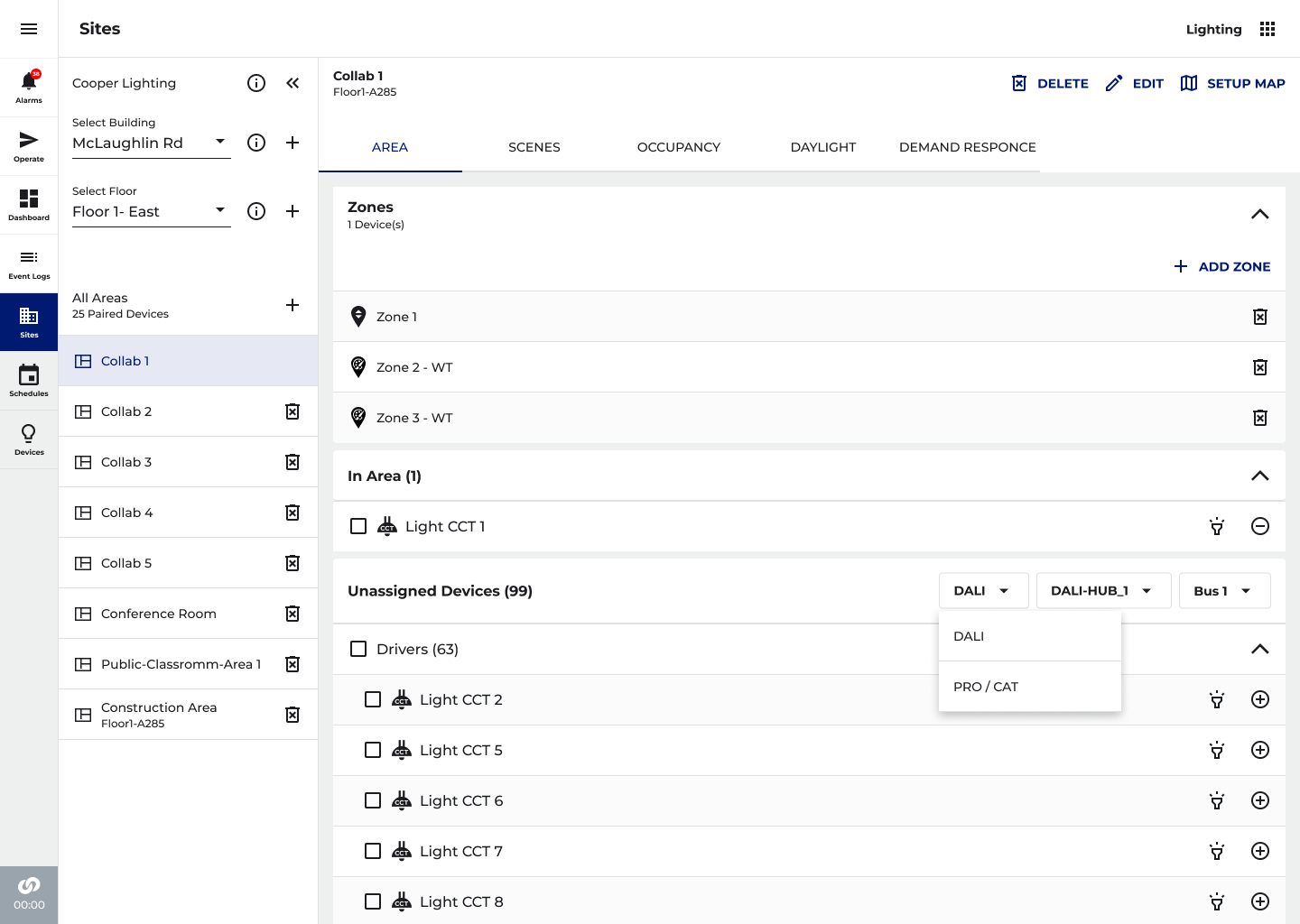
Filter before load.
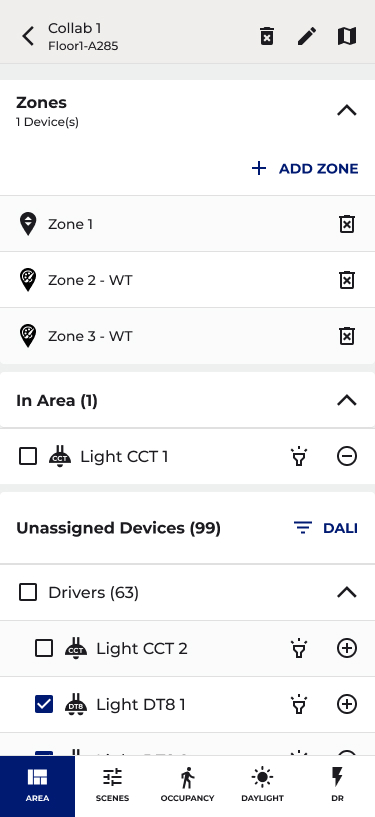
A hospital floor with six or more hubs could dump thousands of devices into the Unassigned list. That floods the screen and destroys load times. So I inverted the default: instead of "show everything," the technician picks a scope first.
A "Select to Start" empty state with System (DALI or PRO/CAT) → Hub → Bus dropdowns narrows the list to one bus's 128 devices before anything renders. The work becomes bus-by-bus, which is exactly how DALI-2 is physically wired.
Scales 50 → 3,000
with no model change.
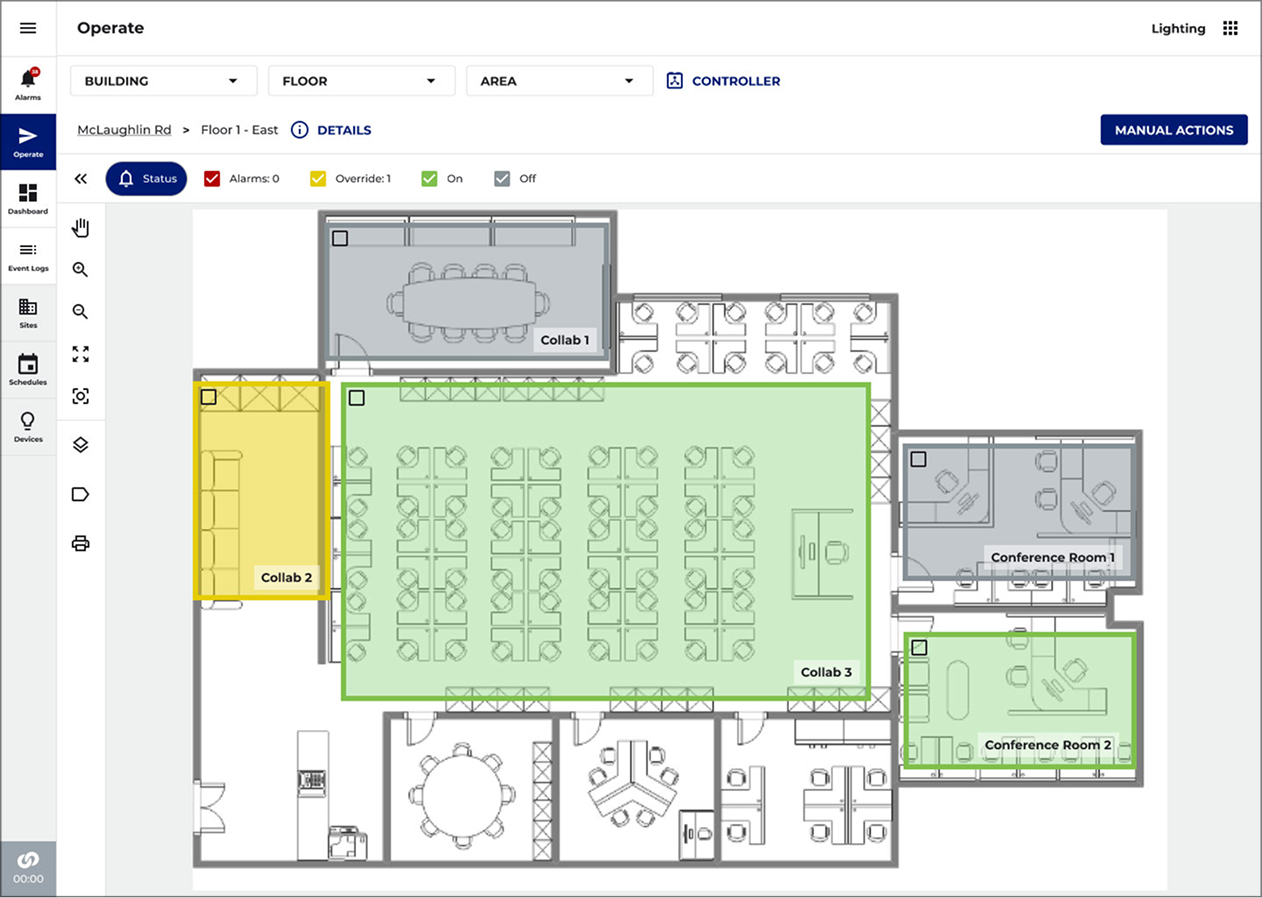
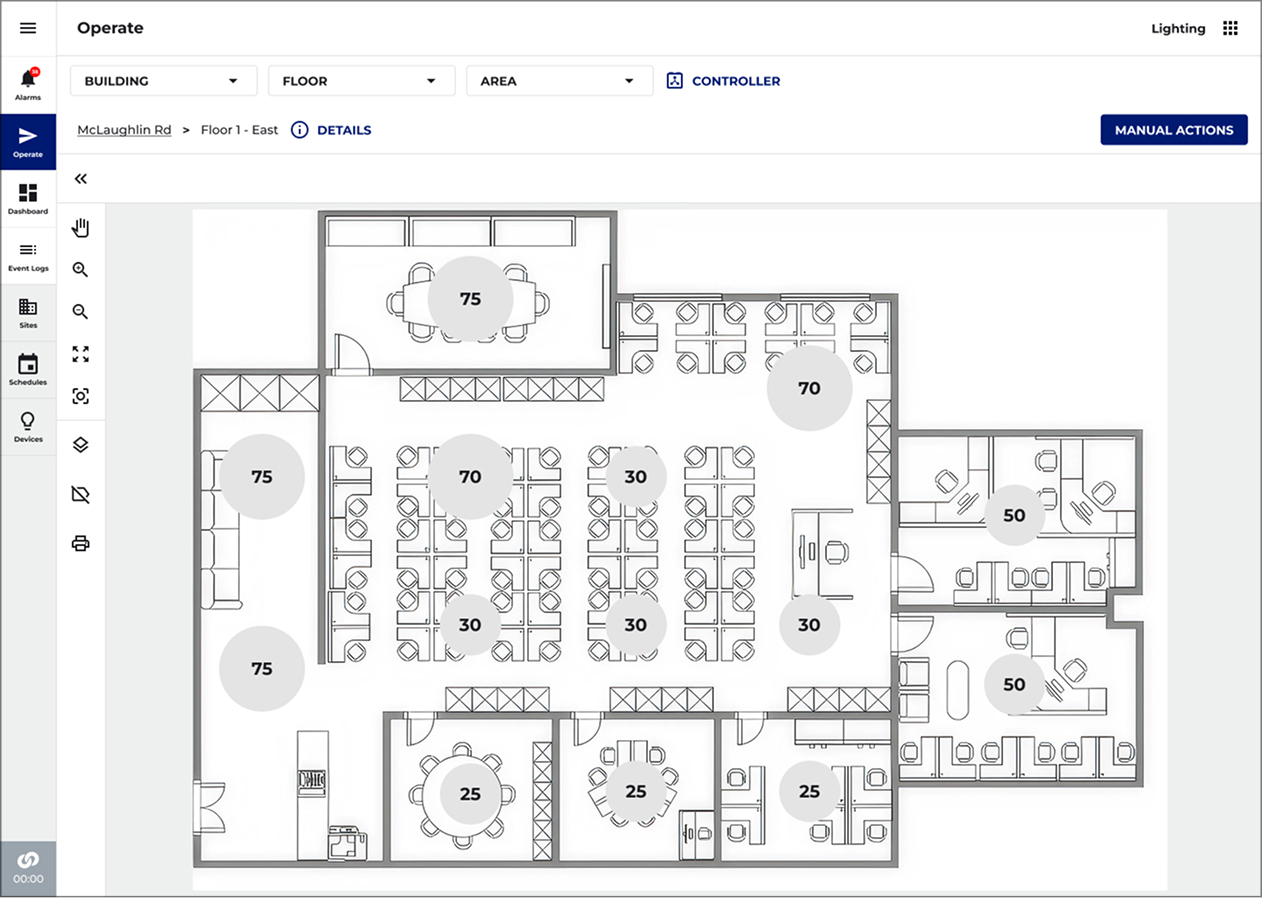
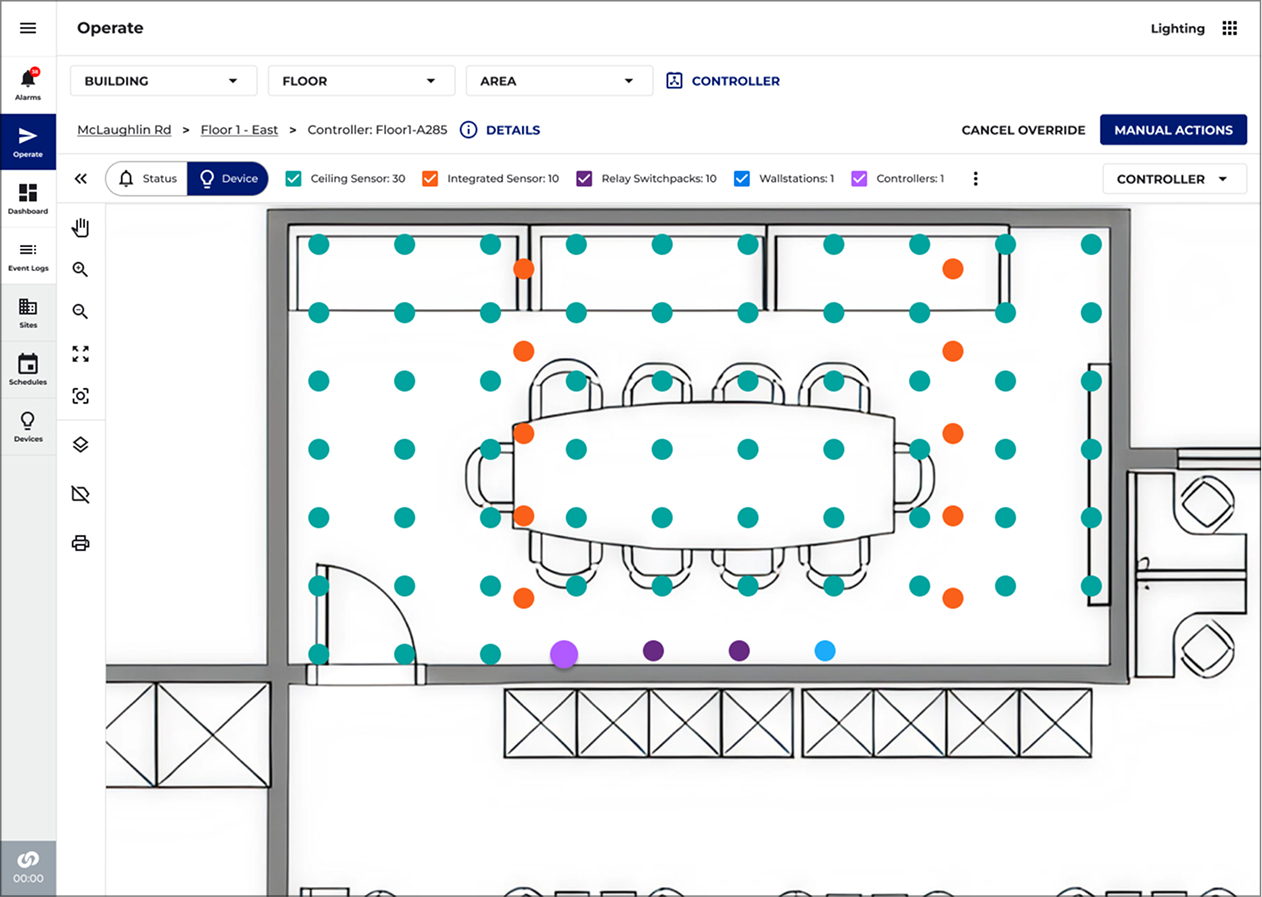
The fixed device tree became a Building → Floor → Area → Zone → Device dropdown bar, and the map was clustered. Zoom in to break clusters into devices; toggle type or health.
The two-wire bus,
in every icon.
I drew the device icon set in Adobe Illustrator around one shared motif: the DALI 2-wire bus, the physical trait every DALI device has in common. You read the category first, "this is a DALI device," then the type. Exported as SVG and validated for rendering through Fontello.
 Fixture · Dimmable
 Light Fixture · DT8
 DT6 · Single Channel
 DT6 · Dual Channel
 Light Fixture · CCT
 DALI Hub
 DALI Hub Bus
 Dual-Tech Sensor
 PIR Sensor
 Wall Station
 Contact Closure
 RSP DAC · CCT
 RSP DAC · Dimmable
 Relay · On/Off
 Find Devices
A moving floor, decided in lockstep.
Hardware prototypes arrived on a rolling basis, and we never knew for certain which third-party devices would be available. Weekly cross-functional reviews kept design in lockstep with engineering. Every row below pairs a challenge with what I did about it.
Zero to one, shipped
and QA-clean.
The V1→V2 pivot came down to seeing that a 10-minute blocking import was not a loading-state problem. It was an architectural mismatch between the mental model of commissioning and the protocol's real timing. Engineering's answer was a longer timeout. The UX answer was to design around the wait until it disappeared from view.
None of it was decided in isolation: hardware bandwidth limits, device naming, the dual-channel abstraction, the floor-plan hierarchy. Each one had to clear engineering constraints, product commitments, QA dependencies, and hardware availability at the same time. Having worked across connected lighting, enterprise SaaS, and hardware-adjacent environments, I had the credibility and domain fluency to lead those calls instead of reacting to them.
The patterns from DALI (non-blocking scan, the two-banner progress model, filter-before-load, dropdown navigation, device-vs-endpoint display logic) are now the reference architecture for future IoT subsystems in WaveLinx, documented in the CLS Design System for reuse.
The company now sells the story the design told.
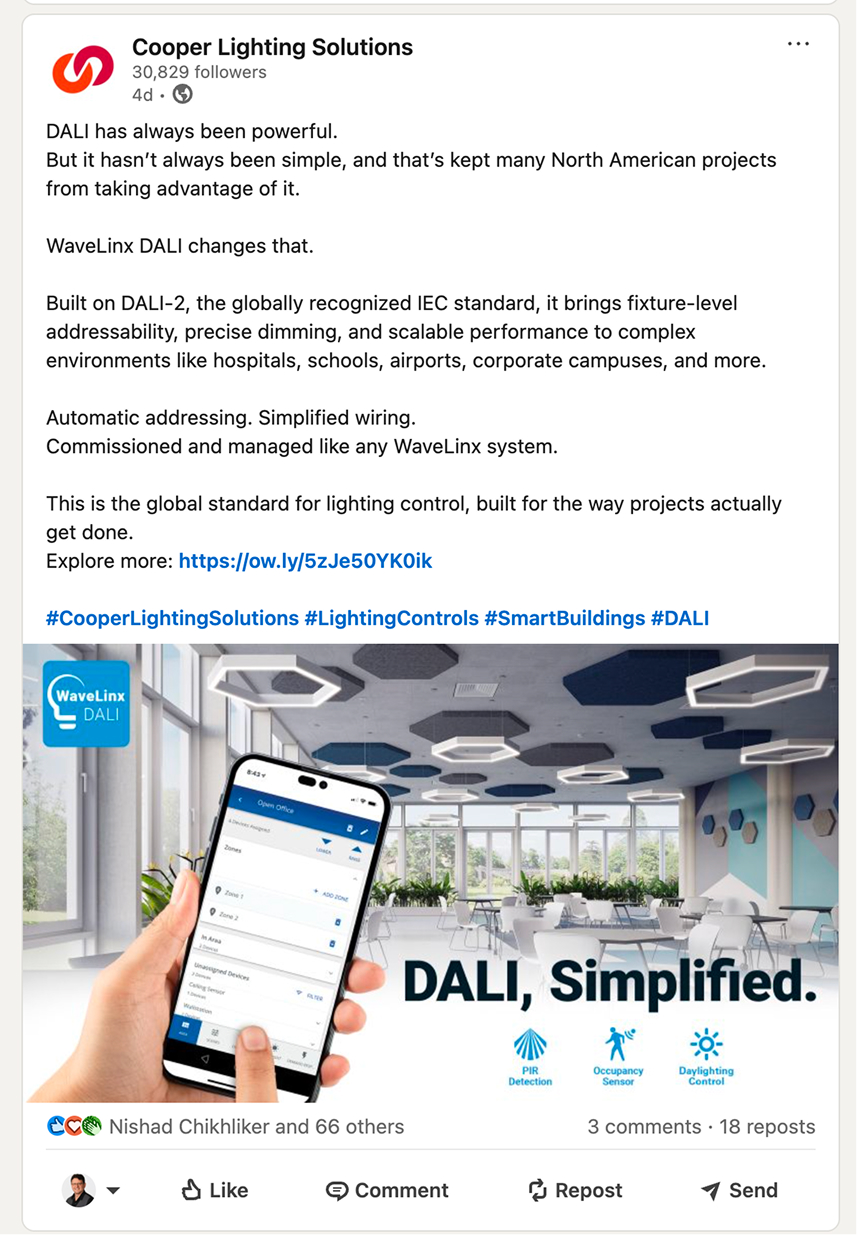
After release, Cooper Lighting's own LinkedIn campaign led with the exact promise this work was built around: "DALI, Simplified." Automatic addressing, simplified wiring, commissioned like any WaveLinx system. The campaign's hero image is the shipped commissioning app itself.
Marketing is now repeating the simplification story that UX worked out across product, firmware, engineering, and field teams. It stopped being an internal argument somewhere along the way and became how the company describes the product.
"DALI has always been powerful. But it hasn't always been simple. WaveLinx DALI changes that."