FROM A WALL OF ALARMS TO a Conversation
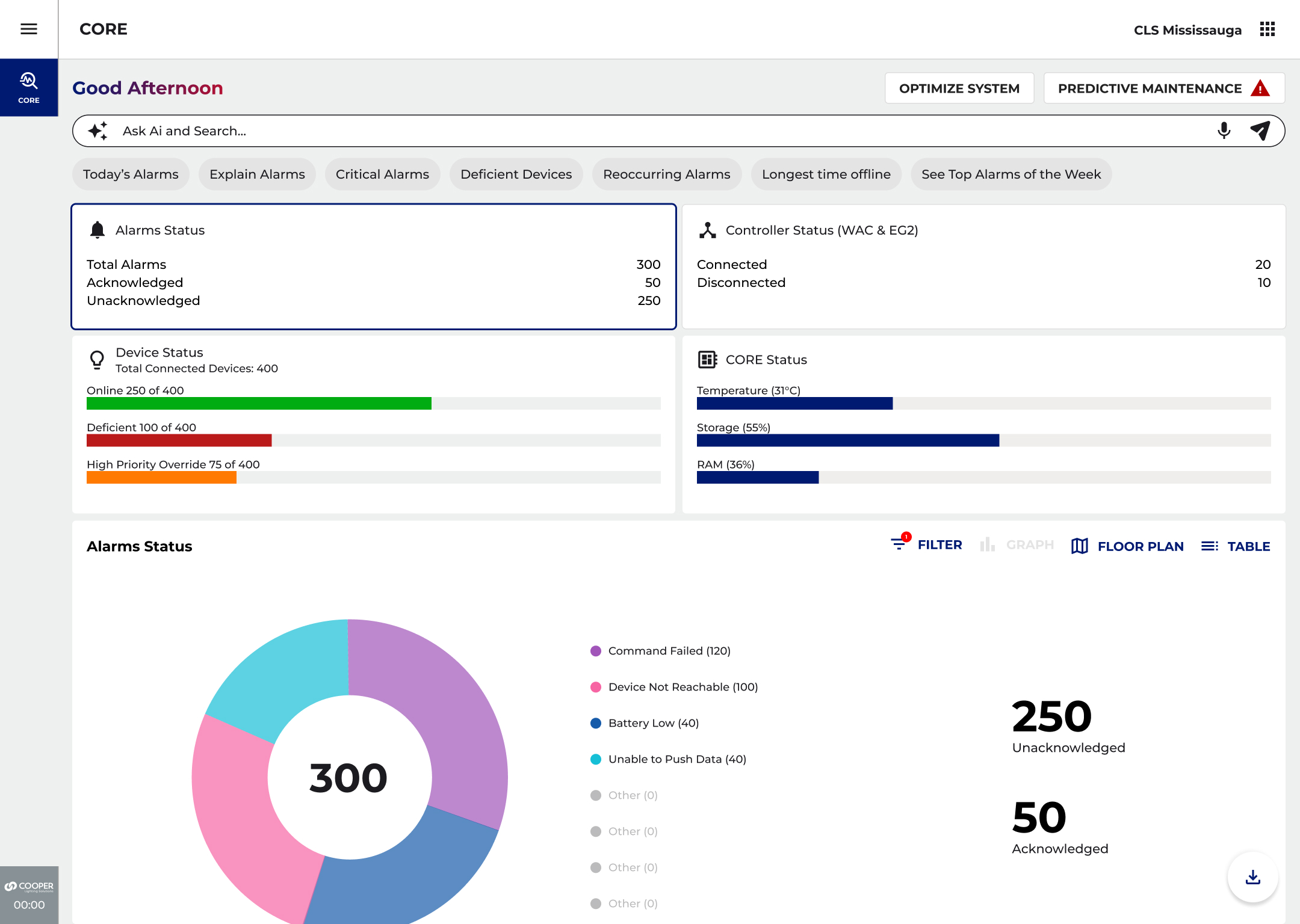
CORE manages thousands of connected lighting devices across enterprise buildings, controllers, sensors, wall stations, relay packs. At scale, the platform generated a relentless stream of alarms and status codes that only specialists could decode, and maintenance stayed stubbornly reactive: teams found out a device had failed only after it went dark.
My mandate was to define how AI should live inside an established enterprise product, not as a bolted-on chatbot, but woven through the daily workflow. Three pillars emerged: conversational access to the system, explainability for every alarm, and prediction ahead of failure.
BUILT FOR THE PEOPLE Holding the Pager
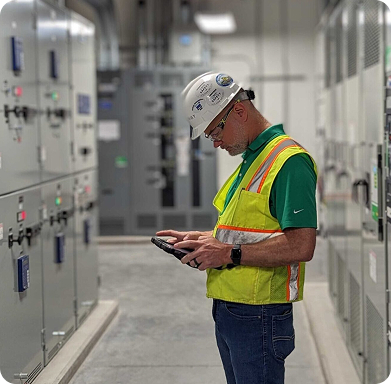
AI only earns its place if it helps the person on the floor at 2am. We anchored every decision to three operators, each with different expertise, urgency, and tolerance for jargon.
Owns building uptime, not lighting protocols. Needs the day's risk at a glance and a clear next action, never a fault code to Google.
On a ladder with a tablet and gloves. Needs the exact device, the exact step, and the part number, fast, hands-busy, no scrolling.
Specs fixtures for customers and wants AI to recommend the right product for a brief, precision vs. price, without leaving the tool.
FOLLOW ONE FAILING LIGHT all the way to a decision.
Intelligence was never bolted on here. It was infused into the same infrastructure, one layer at a time. DALI-2 taught the hardware to know itself. CORE Insights taught the building to observe itself. This platform taught the system to explain itself. Advance one real signal, a luminaire beginning to fail, and watch each layer add meaning the one below can’t.
A flicker, and nothing more.
A luminaire on Level 3 begins to flicker. Without intelligence this is a complaint waiting to be filed, noticed on a night shift, fixed whenever someone walks the floor with a ladder. Advance the signal to see what DALI-2 makes of it.
A42’s driver is degrading and will likely fail within weeks. Three fixtures from the same batch are on the same path. Replace all four in Thursday’s maintenance window, before the corridor goes dark on a night shift.
No identity. No history. No meaning yet.
Illustrative scenario. The data shapes are real (DALI-2 status reporting, CORE telemetry, AI remediation); the numbers stand in for live values.
ONE BAR TO Ask the Building Anything
A single "Ask AI & Search" bar sits at the top of every CORE screen. Below it, a row of one-tap intents, Today's Alarms, Critical Alarms, Deficient Devices, Longest Time Offline, turns the most common questions into instant queries. The same answer can be read three ways: as a floor plan, a building roll-up, or a table.
{{ viewBody }}
EVERY ALARM CODE, Translated to a Plan
The "Explain Alarms" feature is the heart of the work: pick any fault code and AI returns what it means in plain language plus a numbered remediation workflow, the same answer a senior specialist would give, available to anyone.
↓ TAP AN ALARM TYPE TO GENERATE ITS REMEDIATION
Recreated from the shipped CORE "Explain Alarms" panel, live in this case study so you can step through each fault type.
FIX IT BEFORE It Goes Dark
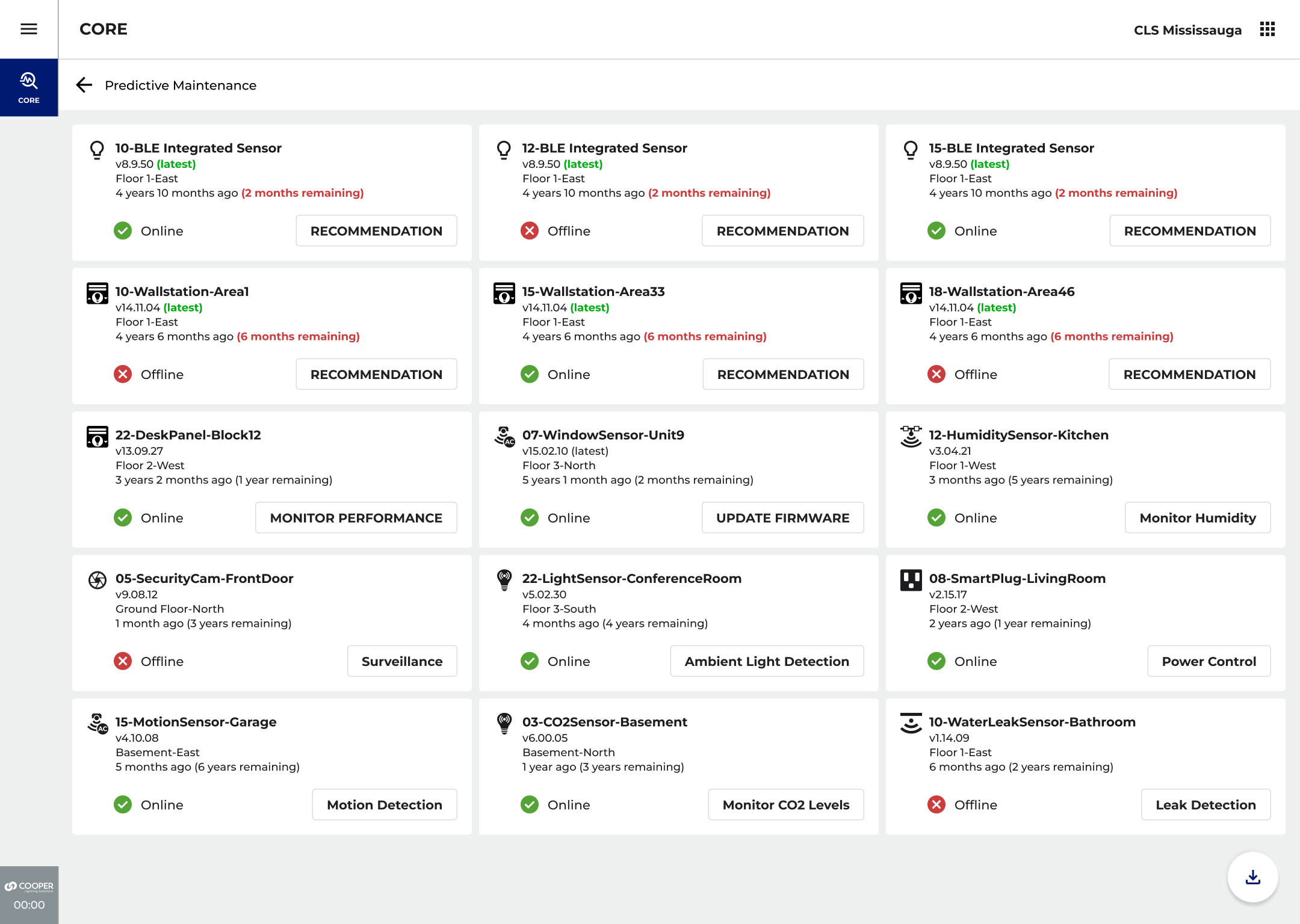
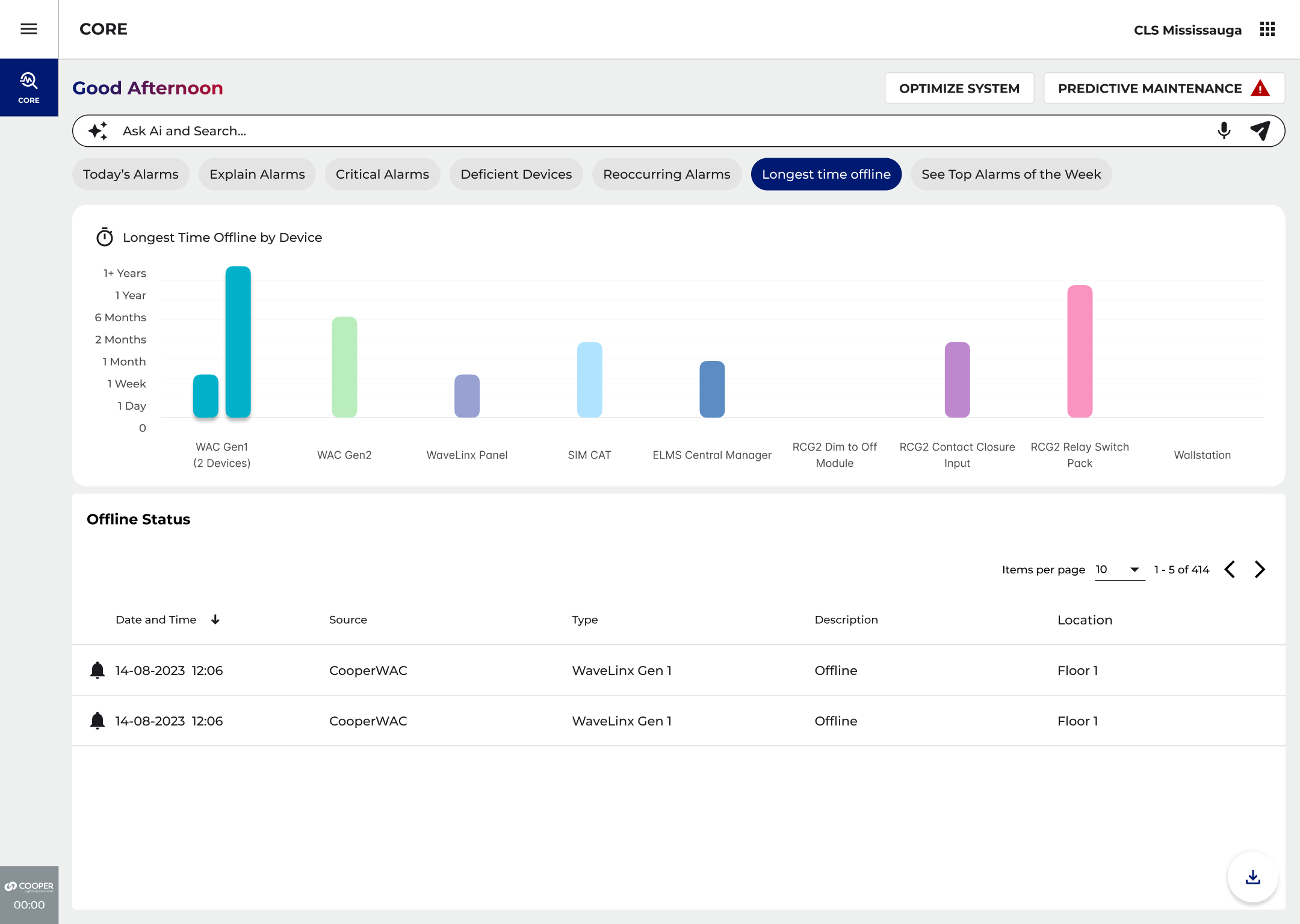
Predictive Maintenance flips the model from reactive to proactive. Each device card shows firmware status, install age, and an AI-estimated lifespan, "2 months remaining", with a one-tap recommendation. The companion "Longest Time Offline" view ranks devices by silence, so the worst actors surface first.
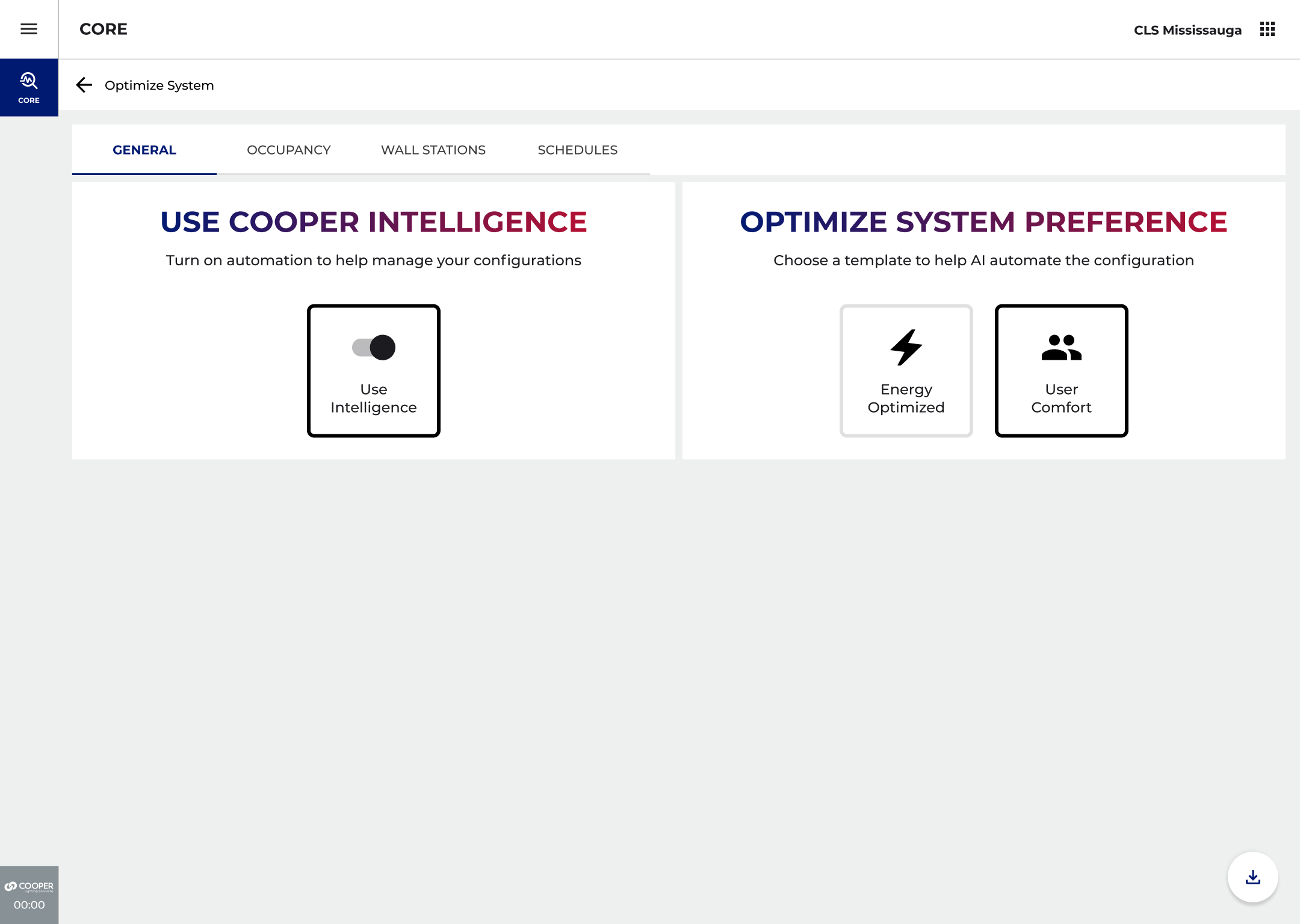
SET THE INTENT, Let It Tune Itself
Rather than configuring hundreds of schedules by hand, a manager turns on Cooper Intelligence and picks a single goal. The system then tunes occupancy response, dimming, and schedules across the site to match, and keeps learning from how the building is actually used.
{{ optBody }}
FROM A BRIEF TO the Right Fixture
The same intelligence reaches sales and specification. A conversational "Fixture Recommendation" assistant turns a plain brief, "precise lighting for a grocery parking lot", into specific products, then connects to a searchable library of 5,000 IES files and an Area Wizard that auto-places fixtures on a real site map.
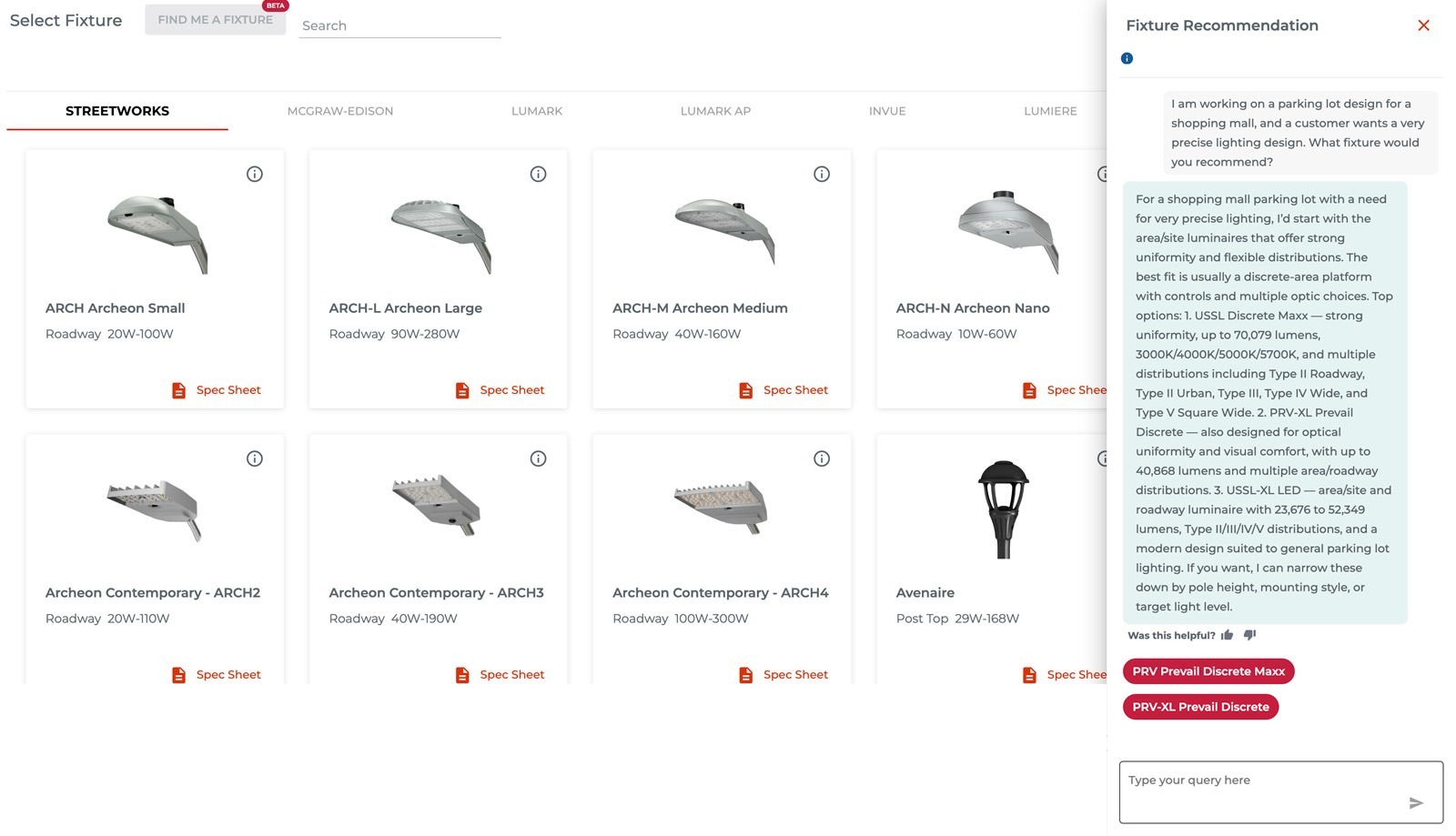
A conversational AI window where the specifier describes the job in plain language, and the assistant recommends the matching fixture from the catalog.
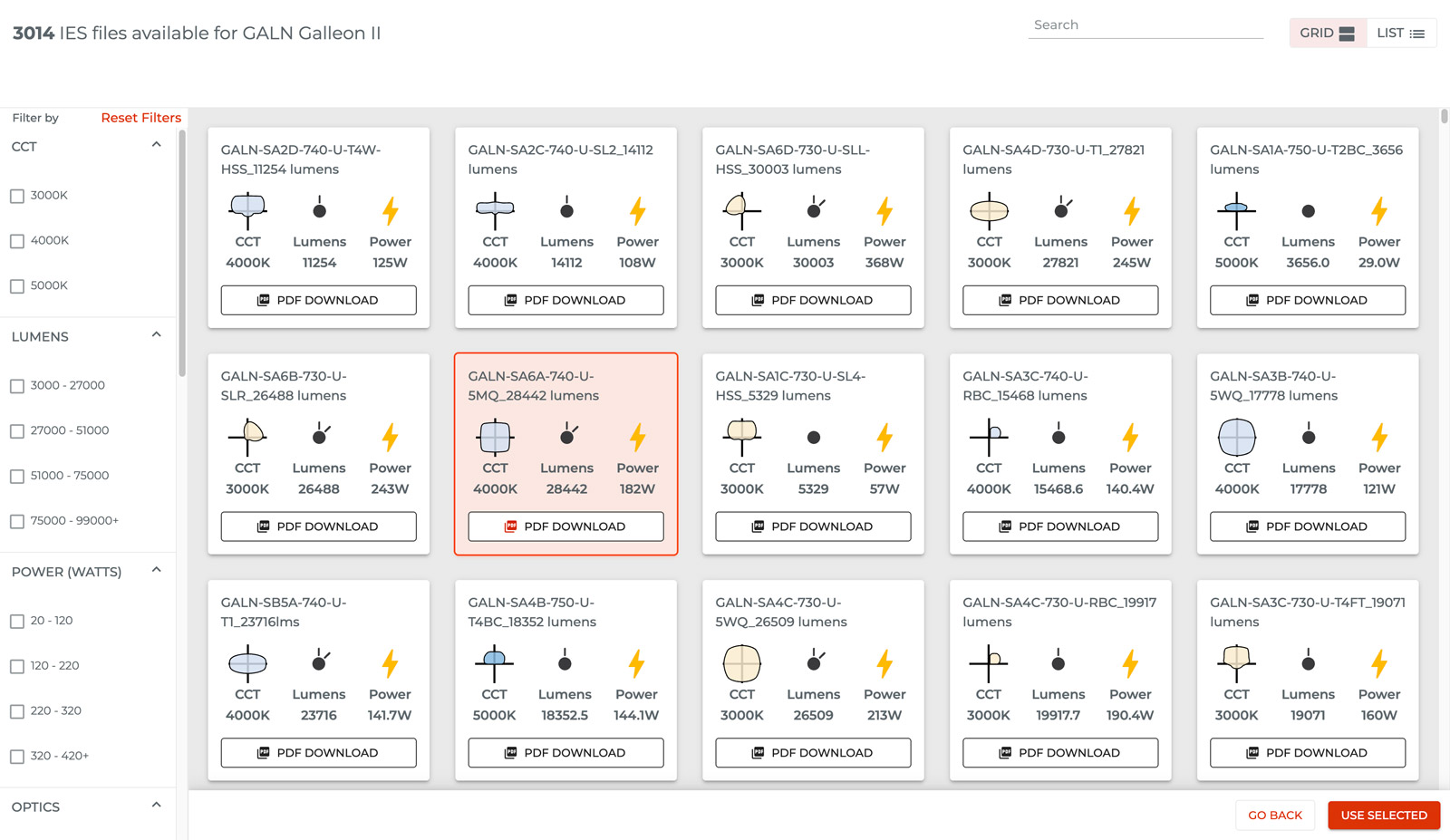
5,000 photometric files, filtered by CCT, lumens, wattage and optics, multi-select and export in a click instead of digging through PDFs.
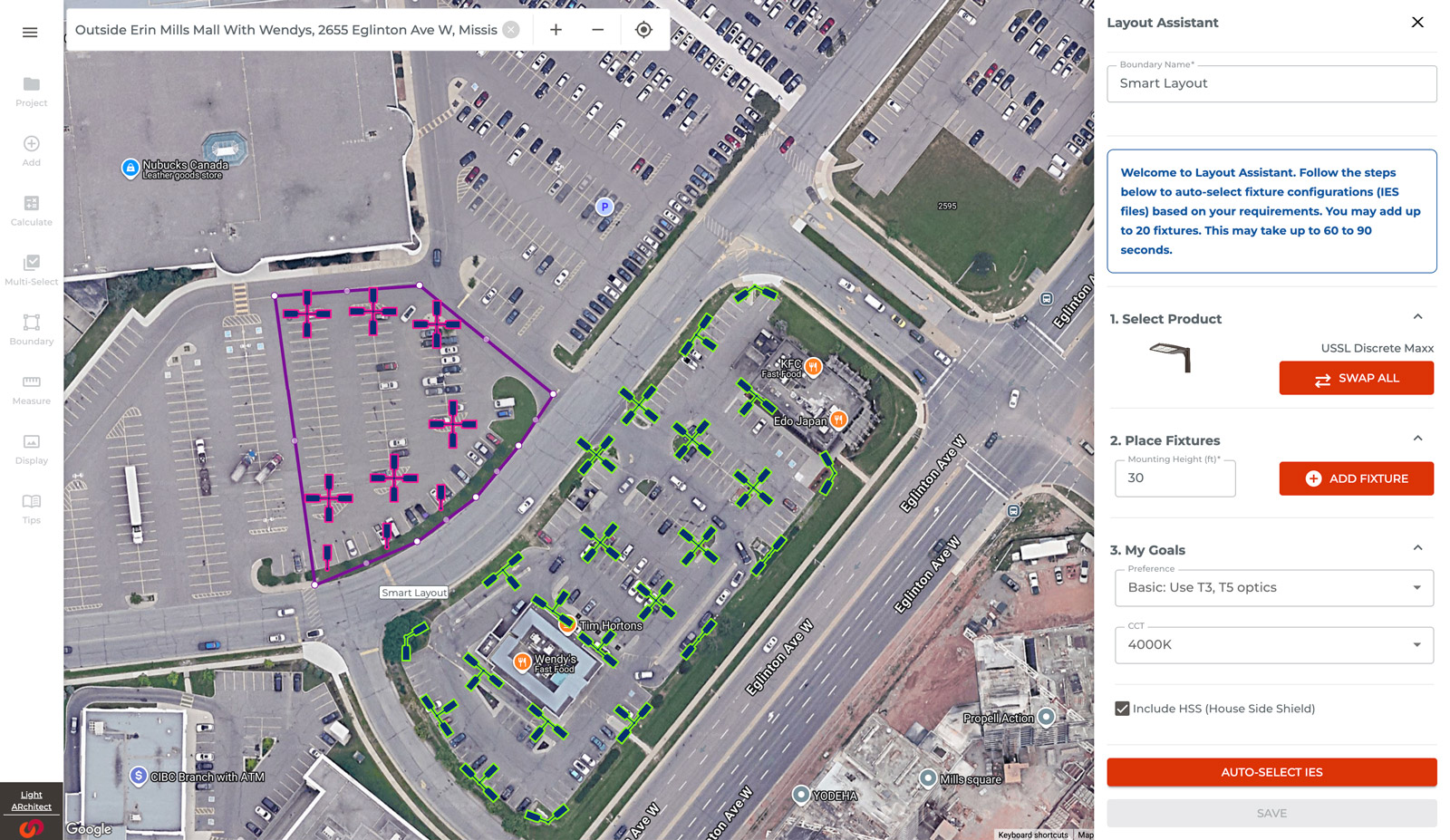
Draw a boundary, set requirements, and AI auto-selects optics and places up to 20 fixtures to hit the target light level and uniformity.
WHAT INTELLIGENCE Actually Bought
Anchoring AI to existing pain, the alarm wall, gave it an obvious job from day one. Framing the assistant as explanation plus a next step, not open chat, kept trust high: every answer was specific, sourced from a real device, and actionable.
Confidence and provenance deserve to be first-class, showing why the AI predicted a failure, not just that it did. And the optimization loop should expose what it learned over time, so managers can trust the system to keep tuning without watching it.
"The goal was never to add AI to a dashboard. It was to make a 400-device building answer a question, and tell you what to do next, the way the best technician on the team would."