FROM ENTERPRISE BACKBONE TO Consumer Living Room
The strategic opportunity: adapt enterprise-grade technical depth for the consumer smart-home market and compete directly with established platforms. Two things stood in the way. The existing B2B UX assumed expertise and optimized for configuration depth over daily usability, and the consumer space was already crowded with polished, frictionless apps.
Porting the enterprise app was never an option; the product philosophy needed a rethink from the ground up. My mandate covered end-to-end UX: market research, competitive analysis, IA, interaction design, and the large-group stakeholder presentations, working with a cross-functional team of 15 or more.
UNDERSTANDING THE Consumer Mindset
Enterprise users tolerate friction. Consumer users abandon it. Before designing a single screen, the team needed to understand what the smart-home customer actually valued and which needs the current market was leaving unmet. Research ran alongside competitive analysis so we could move fast and still go deep.
"Consumer lighting users interact with their app 10–20 times per day. Every extra tap is not an inconvenience, it's attrition. The daily control experience had to reach near-zero friction, even if that meant hiding 80% of the system's capability behind progressive disclosure."
A structured analysis across five primary competitors turned up a gap: no platform combined professional-grade mesh reliability with consumer-grade simplicity. That intersection was sitting open.
| Platform | Setup | Mesh | Circadian | Multi-Home | Pro Role | Price |
|---|---|---|---|---|---|---|
| Lutron Caséta | ~Moderate | Excellent | ~Basic | ✗ | check | Premium |
| Philips Hue | Excellent | ~Good | Good | ✗ | ✗ | Mid–High |
| Google Home | Excellent | ✗Unreliable | ~Basic | ~Limited | ✗ | Low |
| Amazon Alexa | Good | ✗Variable | ~Basic | ~Limited | ✗ | Low |
| Control4 | ✗Complex | Excellent | Advanced | check | check | Very High |
| This Work★ THIS PROJECT · SMART LIGHTING | Designed for | Auto Mesh | Full | Multi-Home | PRO Role | Premium |
A VISUAL SYSTEM BUILT FOR Low-Light Use
Function drove the color system before taste did. Lighting apps get opened at night, in dim rooms, often on the way to bed. Every decision was tested against low-light legibility, touch-target contrast, and whether someone could read the system's state at a glance without reading a word.
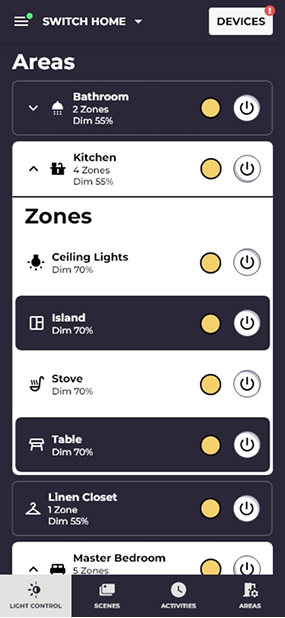
Dark purple (#3D415E) for all control and action screens; light grey for all settings and configuration. Users always knew whether they were in daily-use mode or configuration mode, without reading a single label.
A dark-first theme reduces eye strain after sunset and lets the warm amber glow of active lights carry real status meaning. Active lights appear as warm amber dots and inactive lights are grey, a difference you can read in peripheral vision without a label.
A persistent bottom nav (Light Control, Scenes, Activities, Areas) visible at all times, with no back stack and no hamburger menu to dig through. Smart-home apps get used one-handed, in low light, mid-task, so navigation had to sit in the same place every time and never go away.
Opened 10–20× a day. Built for speed and muscle memory.
Anything you need daily should be one tap away, and anything to do with configuration stays hidden until you go looking for it. Try it: tap a room to expand its zones, tap any power button to toggle.
Early prototypes used a drill-down pattern (tap area → new screen). User testing showed people got disoriented: they lost track of what the other areas were doing. The accordion keeps the whole home visible at all times, so comparing one room against another is trivial and there is no back-navigation at all.
The most frequent action, turning a room off, must never require opening a detail screen. Both area-level and zone-level rows carry an on/off toggle and dim indicator. This doubled the control surface but reduced the task to a single tap for ~90% of daily interactions.
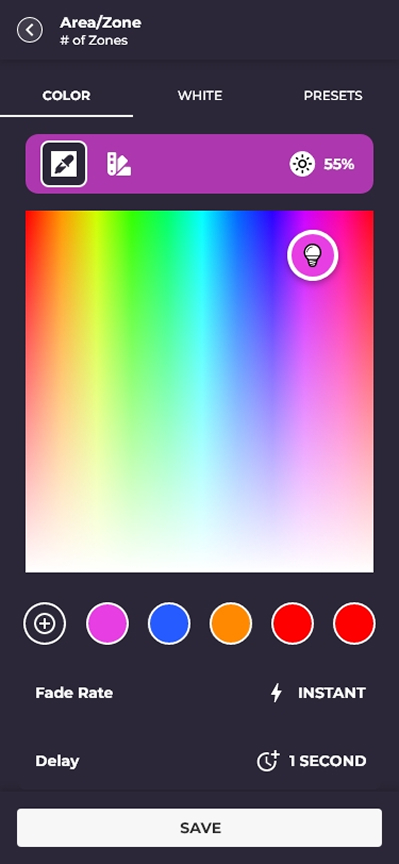
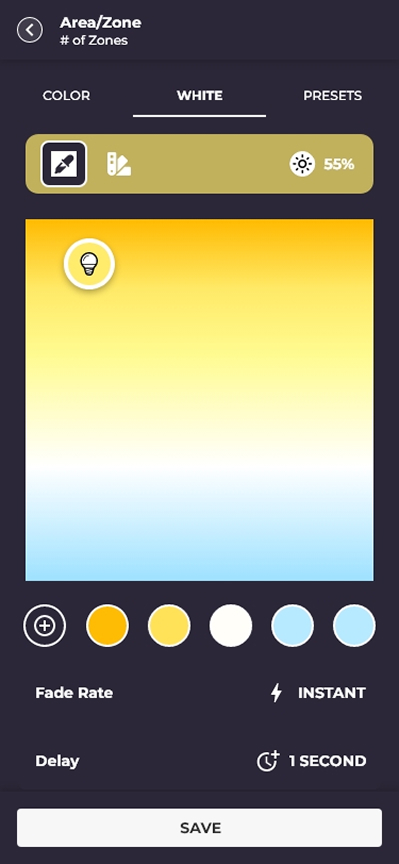
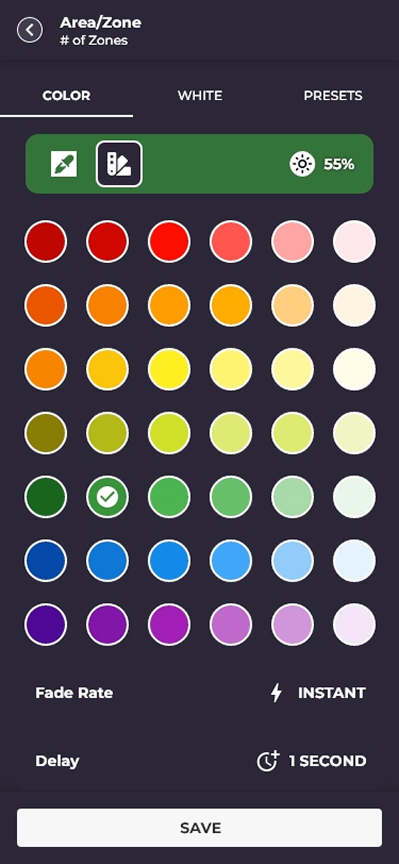
Four color pathways for four kinds of user
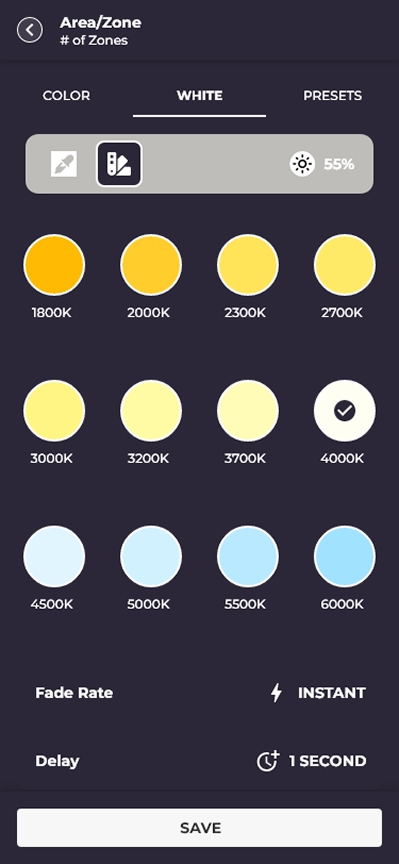
A full RGB picker for tinkerers, a warm-to-cool gradient for everyday use, a curated swatch grid for the impatient, and exact Kelvin values (1800K–6000K) for purists. Tap to switch the path.
{{ pickBody }}
How do you hand BLE mesh configuration to someone who's never heard of BLE?
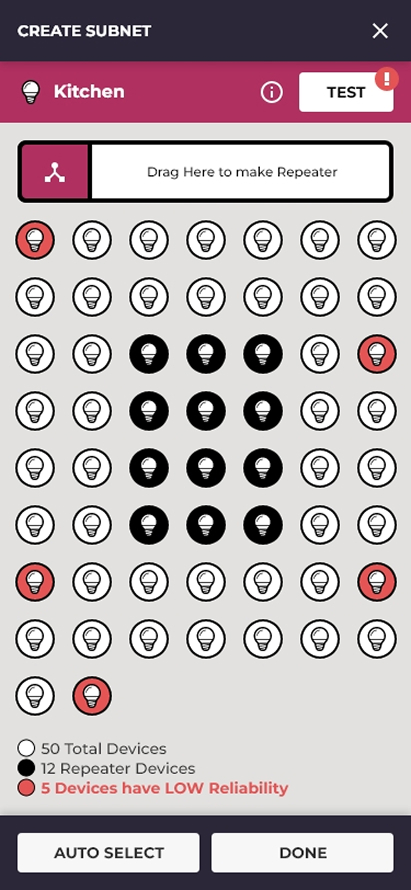
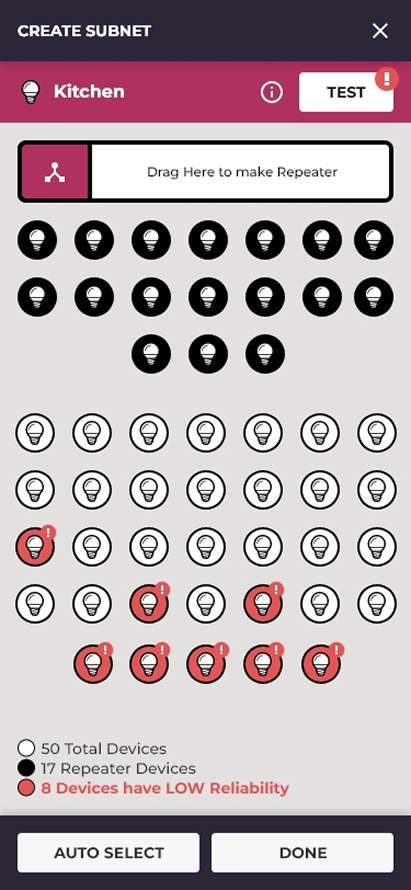
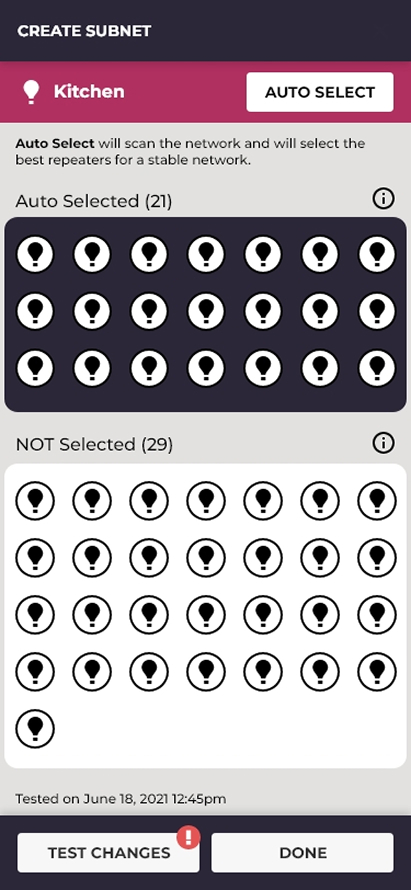
Users don't need to understand the technology if they can read the map. The node colors needed no explanation: black = active repeater, white = stable relay, red = reliability problem. The harder question was how much decision-making to ask of a homeowner at all. We proposed four models. Click through them.
{{ meshBody }}
| Proposal | Approach | Decision Load | Result |
|---|---|---|---|
| P1 · Node Map | Live mesh viz, drag-to-repeater | High, manual node selection | DROPPED Too intimidating |
| P2 · Clusters | Proximity-based device grouping | Medium, group-level decisions | DROPPED Still exposed topology |
| P3 · Virtual Groups | User-defined criteria groups | Medium, still per-device | DROPPED Increased commissioning time |
| P4 · Auto Select | System chooses optimal repeaters | Zero, one confirm tap | SHIPPED Engineering validated |
The same logical map scales from a 32-device condo to a 247-device estate. The system creates the groups and subnets, then assigns repeaters on its own. Example: 247 devices, 66 repeaters, 22 subnets created.
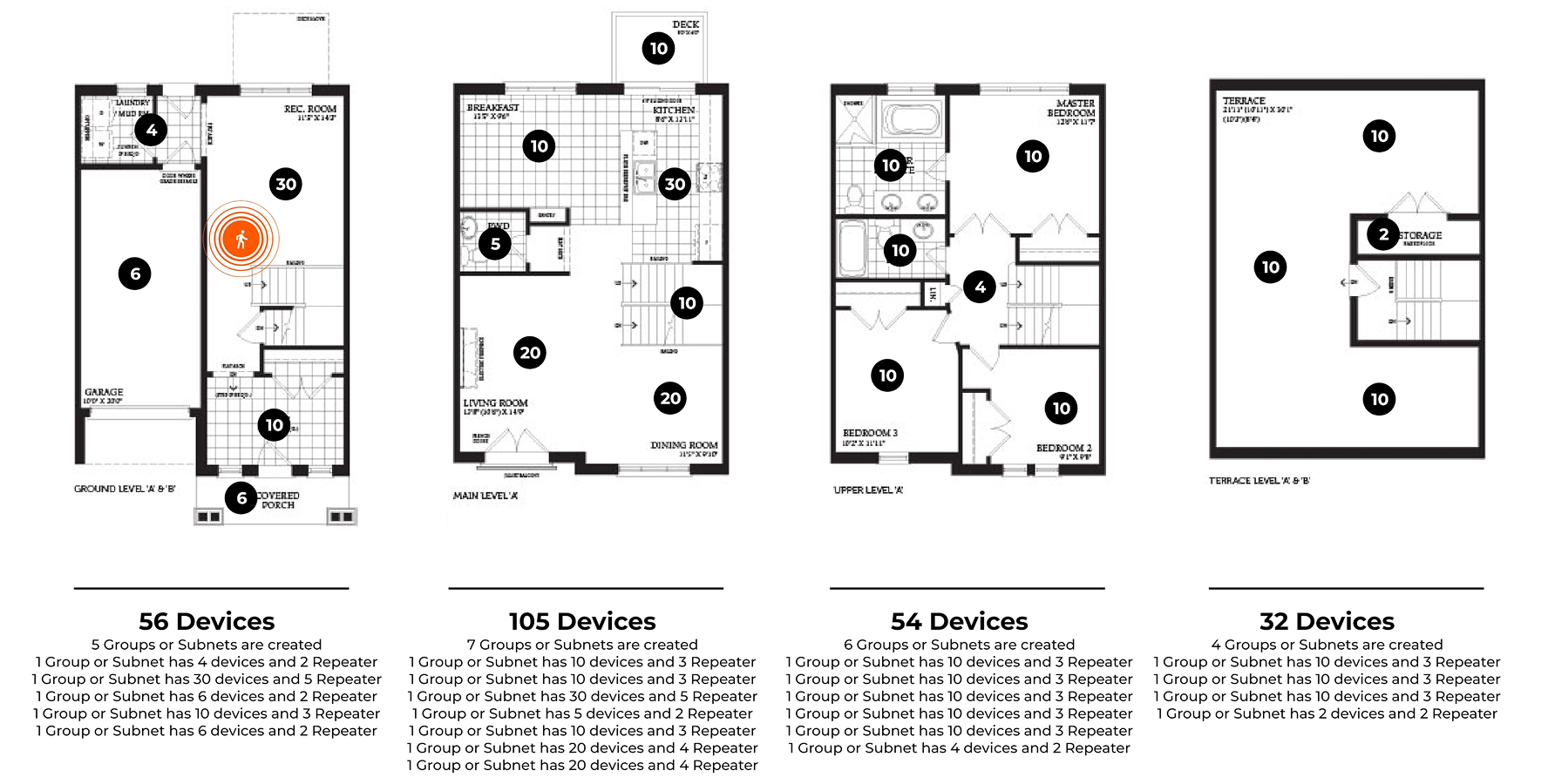
Configure the home before a single fixture is mounted.
NFC tags let users scan a device while it is still in its box, assign it to a room, and name it. By the time the electrician arrives, the logical map of the home already exists. Step through the QR / NFC flow.
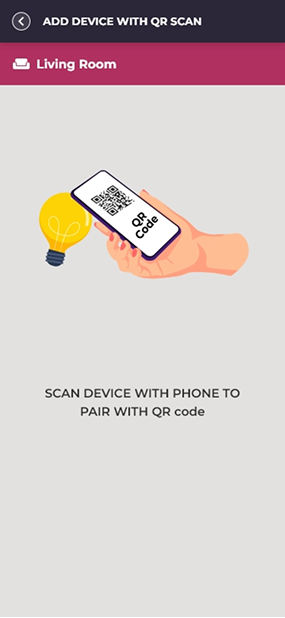
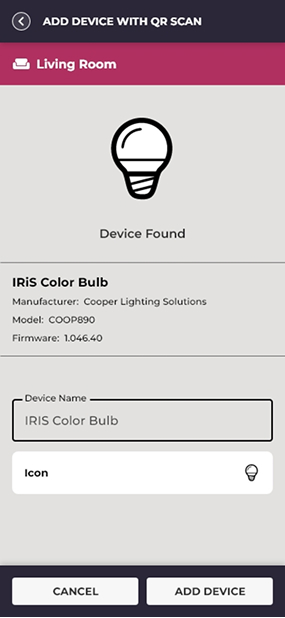
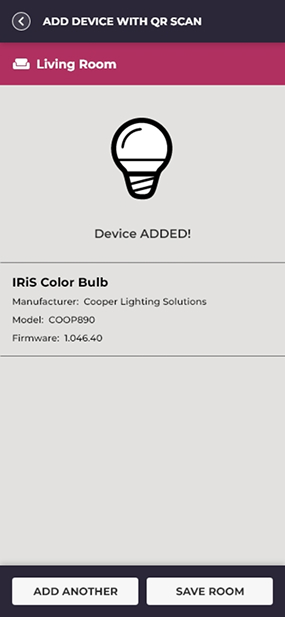
Naming was embedded in setup rather than deferred to settings, because renaming rates after setup were extremely low in comparable products. If users didn't name a device during commissioning they never would, and they would live with "IRiS Color Bulb 1" forever. Forcing the moment raised permanent naming adoption significantly.
Multi-home control and a circadian engine that knows when the sun sets.
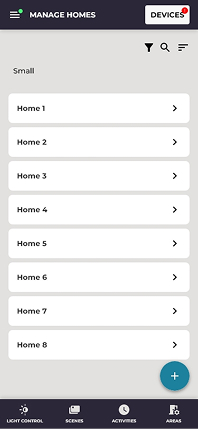
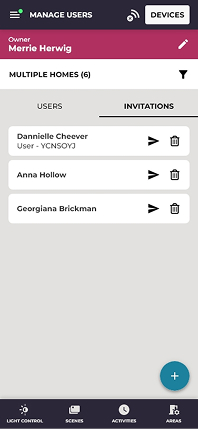
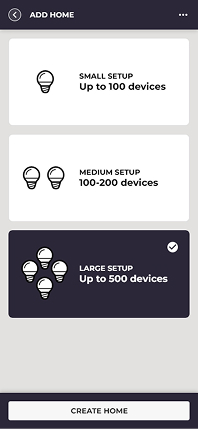
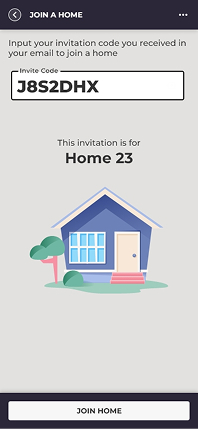
Basic consumer competitors offered none of this: multiple properties on a single account, three role types, and scheduling driven by real sunrise and sunset data. All of it transferred directly from B2B deployments.
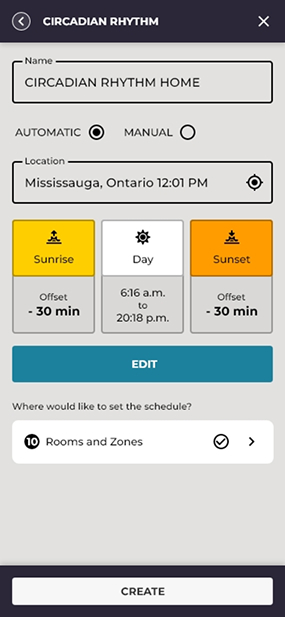
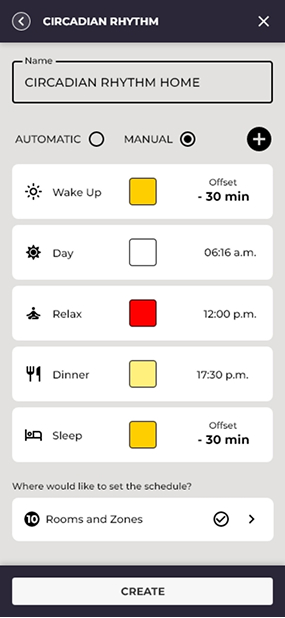
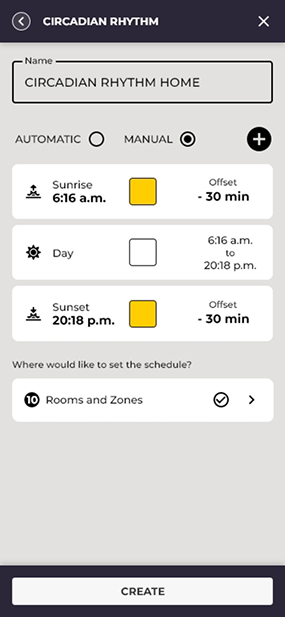
Activities were what separated the app most sharply from basic competitors. Instead of simple on/off timers, the system ran a full circadian rhythm engine that adjusted color temperature and brightness by itself, based on time of day and the user's real GPS sunrise and sunset data.
Users wanted lights on before the sun fully rose. The offset control (−30 min, −15 min) solved this in user-language terms without exposing absolute times that would need seasonal adjustment.
Phases were anchored by warm color swatches rather than Kelvin values. "Relax" at 17:30 was set by picking a warm amber swatch. Emotional language stood in for technical specification, which lowered the bar for adoption.
TRANSLATING B2B DEPTH INTO Consumer Confidence
The project produced a consumer product that could compete directly with established apps while keeping the technical depth that made the enterprise platform valuable.
The Areas / Zones / Devices / Accessories hierarchy maps to how users think about their homes, with no technical terminology at the top level.
Mesh, subnet config, and repeater management stay invisible to consumers while remaining reachable by PRO installers.
A GPS-based circadian engine with emotional-language scheduling positioned the app well above basic on/off-timer competitors.
Pre-installation commissioning via NFC/QR enabled a configure-then-install workflow novel in the consumer lighting space.
Two-tone color strategy, motion semantics and a component library established a coherent system for future platform scaling.
Property-manager and vacation-home capability, unaddressed by any primary competitor, opened a premium segment beyond the single residence.
The Auto Select model only became possible once engineering confirmed the system's confidence in choosing optimal nodes. The best UX decision here was to remove the decision entirely, and that required trusting engineering's data. Cross-functional candor is what produced the outcome; design alone would not have gotten there.
The same underlying capabilities (subnet management, role-based access, multi-site control) needed expressing in consumer language and consumer mental models. The PRO role and multi-home features came straight from B2B and turned into differentiators in B2C.
Light Control, opened 10–20× per day, received the most iteration, testing and engineering negotiation. The accordion, dual-level controls and status indicators all came from multiple feedback rounds. Daily ritual screens matter far more than configuration screens.
Scheduling landed better when the phases were named Wake-Up, Relax, Dinner, and Sleep than when they were labeled by Kelvin. The circadian engine was technically sophisticated; the UI had to make it feel like curating a mood rather than programming a system. Most of the craft in consumer IoT lives in that gap.